
A Beginner’s Guide to Forex Trading
Forex trading, short for foreign exchange trading, is the act of buying and selling currencies with the aim of making a profit. For many, it represents an opportunity to earn additional income or even achieve financial freedom. If you’re just starting out, understanding the fundamentals of Forex trading is crucial. In this article, we will provide you with a comprehensive overview of Forex trading for beginners, including important concepts, tips, and strategies to help you get started. For more detailed resources, check out forex trading beginners https://trading-bd.com/.
1. Understanding Forex Trading
The Forex market is the world’s largest financial market, with a daily trading volume that surpasses $6 trillion. Unlike stocks or commodities, the Forex market operates 24 hours a day, five days a week, allowing for flexible trading opportunities at any time. Currency pairs, such as EUR/USD (Euro/US Dollar) or GBP/JPY (British Pound/Japanese Yen), are the assets traded in the Forex market. Prices fluctuate based on various economic and geopolitical factors, which traders capitalize on to make profits.
2. Key Concepts in Forex Trading
2.1 Currency Pairs
Currencies are quoted in pairs, indicating the value of one currency against another. The first currency in the pair is known as the base currency, and the second one is the quote currency. For example, in the pair EUR/USD, EUR is the base currency, and USD is the quote currency. When you buy this pair, you’re betting that the Euro will strengthen against the US Dollar.
2.2 Pips and Lots
A pip is the smallest price movement in the Forex market, typically representing a one-digit movement in the fourth decimal place of a currency pair. Understanding pips is essential for measuring profit or loss in your trades. Lots, on the other hand, refer to the size of a trade. A standard lot is 100,000 units of the base currency, while mini and micro lots represent 10,000 and 1,000 units, respectively.
2.3 Leverage
Leverage allows traders to control a larger position than they would be able to with their own capital alone. For example, if a broker offers 100:1 leverage, this means you can control $100,000 worth of currency with just $1,000 of your own money. While leverage can amplify profits, it can also increase losses, making risk management vital in Forex trading.
3. Getting Started with Forex Trading
3.1 Choosing a Broker
Selecting a reputable Forex broker is one of the first steps in your trading journey. Look for brokers that are regulated by recognized authorities, provide a user-friendly platform, and offer competitive spreads and fees. Research their trading conditions, customer support, and available trading tools to ensure they meet your needs.
3.2 Demo Trading
Before risking real money, it’s advisable to practice with a demo account. Most brokers offer demo accounts that allow you to trade with virtual money, giving you the opportunity to test strategies and familiarize yourself with the trading platform without financial risk.
3.3 Developing a Trading Strategy
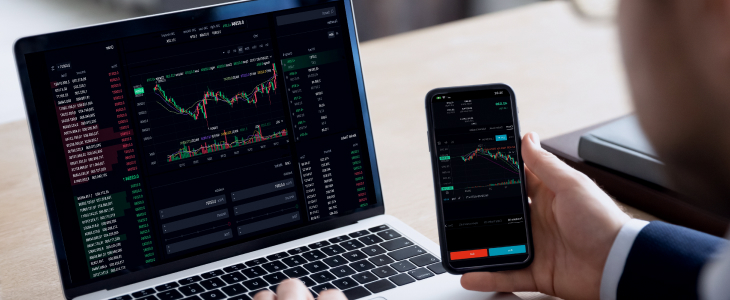
A well-defined trading strategy is essential for success in Forex trading. Your strategy should outline your trading goals, risk tolerance, entry and exit points, and the criteria for choosing currency pairs. Common strategies include scalping, day trading, swing trading, and position trading. Each has its own approach and time commitment, so choose one that fits your lifestyle and risk appetite.
4. Risk Management in Forex Trading
4.1 Importance of Risk Management
In Forex trading, the potential for profit is accompanied by the risk of loss. Effective risk management strategies can help protect your capital and increase your chances of long-term success. This includes setting stop-loss orders to limit potential losses and using proper position sizing to control exposure on each trade.
4.2 Setting Stop-Loss and Take-Profit Orders
Stop-loss orders automatically close a trade if the market moves against you, limiting your losses. Take-profit orders serve a similar function by automatically closing your trade once it reaches a predetermined profit level. Using these orders helps you stick to your trading plan and avoid emotional decision-making.
5. Technical and Fundamental Analysis
5.1 Technical Analysis
Technical analysis involves studying price charts and using indicators to identify trends and potential reversal points. Common indicators include moving averages, Relative Strength Index (RSI), and MACD (Moving Average Convergence Divergence). Learning to read charts and applying technical analysis can give you an edge in making trading decisions.
5.2 Fundamental Analysis
Fundamental analysis focuses on the economic, political, and social factors that influence currency values. Traders analyze economic indicators, such as GDP growth, employment rates, and inflation, to gauge a currency’s strength. Understanding economic news releases and events is essential for anticipating market movements and making informed trading choices.
6. Psychological Aspects of Trading
Trading is not just about technical and fundamental analysis; psychology plays a significant role in a trader’s success. Emotional decision-making can lead to impulsive actions and losses. Developing discipline, patience, and a positive mindset is essential for maintaining a trading routine and adhering to your strategy.
7. Continuous Learning and Improvement
The Forex market is constantly evolving, and successful traders commit to continuous learning. Staying informed through books, online courses, webinars, and forums can help you improve your skills and adapt to changing market conditions. Consider joining trading communities where you can share insights and learn from experienced traders.
8. Conclusion
Forex trading can be a rewarding endeavor for those who are willing to invest time in learning and practice. By understanding key concepts, developing a robust trading strategy, and implementing effective risk management, beginners can navigate the challenges of Forex trading with more confidence. Remember, successful trading takes patience and discipline. Good luck on your trading journey!
Tinggalkan Balasan